Why Agentic AI Projects Fail
Gartner expects more than 40% of agentic AI projects to be canceled by 2027, not because the models are too weak, but because most launch without a defined owner, a bounded task, or a rule for when the agent hands off to a human. The failure is structural and diagnosable before you spend a dollar.
Behind the stat: what Gartner and Forbes actually found
In June 2025, Gartner predicted that over 40% of agentic AI projects will be canceled by the end of 2027, citing escalating costs, unclear business value, and inadequate risk controls as the drivers. By July 7, 2026, Forbes had revisited the prediction with fresher numbers: 75% of enterprises are now adopting agentic AI, but only a small fraction have reached production, and the share of agent usage involving real "action tools" (booking, writing, moving money) rather than just chat rose from 24% to 65% over the sixteen months prior. Forbes analyst Robert J. Szczerba summarized the pattern behind those failures in the same piece:
"The ones that fail rarely die because the models were too dumb to do the work." Robert J. Szczerba, Forbes, July 7, 2026
That distinction matters for anyone evaluating a project right now: the cancellation risk isn't a model-quality problem you wait out until the next release, it's a governance problem you can audit today.
It's not the model. It's "agent washing"
Gartner's report names the mechanism directly: "agent washing," the practice of relabeling an existing chatbot, RPA script, or workflow tool as "agentic AI" without adding real autonomous decisioning underneath. Of the thousands of vendors currently making that claim, Gartner estimates only around 130 have genuine agentic capability: the ability to plan multi-step work, hold state across a task, and act without a human approving each step.
Buy the rebrand and the project inherits its ceiling: a workflow that routes a fixed decision tree still routes a fixed decision tree, no matter what the pitch deck calls it. Ask a vendor two questions before signing anything: what decision does the agent make without a human in the loop, and what happens when it's wrong. A rebrand rarely has a good answer to either.
Five questions that predict whether your project survives
Ask these before scoping a build, not after the invoice arrives. They're drawn from the same governance gaps Gartner names as the leading cancellation causes, translated into questions a small team can answer in an afternoon.
-
Does one person own the outcome? Projects with a named owner and a defined success metric survive. Projects run as a shared initiative between departments stall the moment budget gets questioned.
-
Does the task stay bounded to one job? "Automate lead follow-up" survives. "Automate the sales process" doesn't. It's several projects wearing one name, and each one needs its own governance.
-
Does the agent have a rule for when to stop and hand off? An agent without an escalation threshold will act confidently on bad information at machine speed. Fixing that doesn't require a smarter model. It requires an encoded rule: dollar limits, confidence thresholds, or categories that always route to a human.
-
Is the input data clean and permissioned? Gartner separately projects that through 2026, organizations will abandon 60% of AI projects unsupported by AI-ready data. An agent fed fragmented or inconsistent data doesn't fail loudly. It produces wrong answers with full confidence.
-
Was a cost ceiling set before build started? "Escalating costs" is Gartner's first-named cause. If nobody set a number the project isn't allowed to cross, someone else will set it for you, later, by canceling the project.
Miss two or more, and the project lands in the 40%. Answer all five in writing before the first line of code, and that's the kind of project we scope for clients.
What scoping tight actually looks like
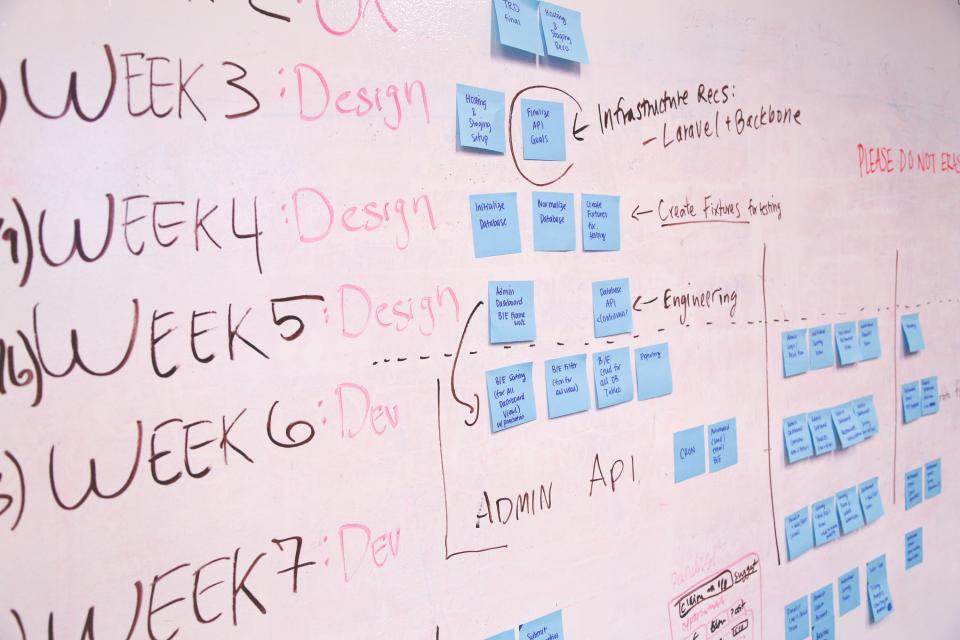
At Media Targeters, every agentic build starts as one of the five questions above, answered on paper before we open n8n, Make, or Zapier. Every lead-qualification agent gets one owner, one task (score and route, not "handle sales"), a hard escalation rule (anything under a confidence threshold goes to a human, no exceptions), and a monthly cost cap agreed before the first workflow runs. The same discipline applies whichever tool runs the workflow. The platform matters less than the boundary drawn around what it's allowed to decide alone. That's the difference between a pilot that quietly disappears in eighteen months and one that's still running, unglamorously, two years later.
The fix here is paperwork, not a bigger model or a longer roadmap: write the governance down before the automation runs, rather than after it breaks.
Waiting isn't the safer option
That same Gartner research that predicts the 40% cancellation rate also predicts growth on the other side of it: at least 15% of day-to-day work decisions will be made autonomously through agentic AI by 2028, up from 0% in 2024, and 33% of enterprise software will include agentic AI by 2028, up from under 1% in 2024. Sitting out only looks like the safe move. In practice it is a slower way to fall behind. The safe option is scoping the pilot so it's one of the 60% that survives, not one of the 40% that gets quietly shut down in a budget review.
If you're weighing an agentic AI build and want the five questions run against your specific workflow, that's a conversation, not a sales page. Bring the workflow you're considering and we'll walk through it together: see what we build or get in touch.
Frequently asked questions
Escalating costs, unclear business value, and inadequate risk controls, not weak AI models. Most cancellations trace back to projects launched without a defined owner, budget ceiling, or success metric.
Vendors rebranding existing chatbots, RPA scripts, or automation tools as 'agentic AI' without adding real autonomous decisioning. Gartner estimates only around 130 vendors, out of thousands making the claim, offer genuine agentic capability.
No. Gartner also projects 33% of enterprise software will include agentic AI by 2028, up from under 1% in 2024. The failure rate is a scoping problem, not a reason to sit out the shift.
Run it against five questions: is there one owner, one bounded task, a defined escalation rule, clean input data, and a cost ceiling? A project missing two or more is a high cancellation risk.
Ready to automate the work?
Media Targeters builds custom agentic AI systems that run your operations while you focus on growth.
Book a discovery callRelated Articles
AI-Native SaaS Architecture: The 2026 Blueprint
The monolith is out. AI-native SaaS architecture in 2026 runs on real-time data, reliable backend AI, and MCP: the protocol that carries apps into ChatGPT.
AI Agents vs Agentic AI: What's the Difference?
AI agents handle single tasks; agentic AI orchestrates them toward goals. Get the real difference, a side-by-side table, and which one your business needs.
How Agentic AI Automates Lead Qualification
See how agentic AI automates lead qualification end to end (scoring, enrichment, and instant follow-up) and the metrics that prove it pays off.

Morocco Real Estate 2026: Boom, Crash, or Neither?
Is Morocco's real estate market booming or crashing in 2026? Bank Al-Maghrib data shows a 40% Q1 transaction drop, but the yearly picture is milder.