AI Agents vs Agentic AI: What's the Difference?
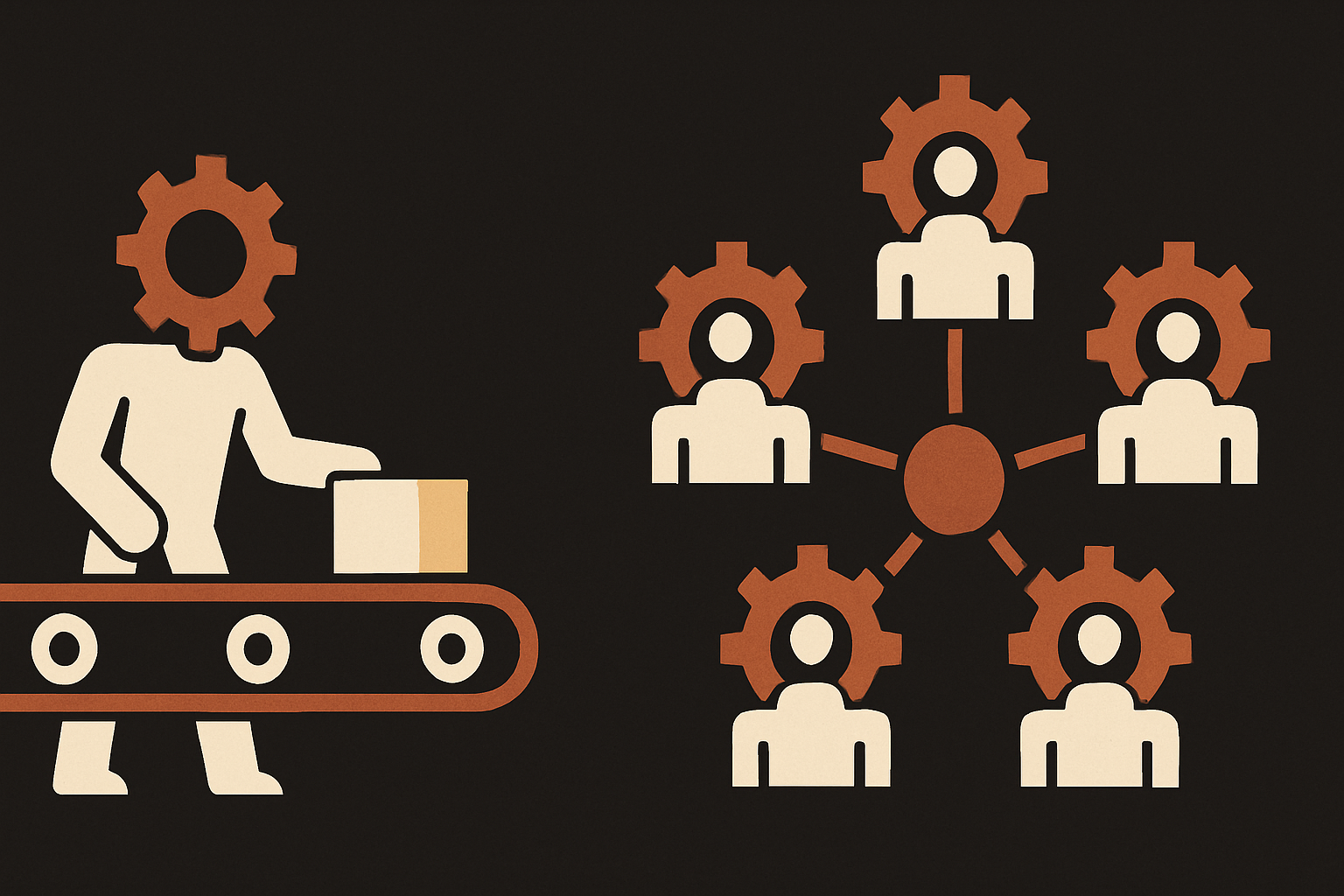
An AI agent handles one well-defined task when you call it. Agentic AI is the larger system that sets its own goals, plans the steps, and coordinates several agents, tools, and data sources to reach an outcome. The quickest way to keep them straight: an AI agent is a worker, and agentic AI is the manager running the whole operation.
That one-line difference changes what you build, what it costs, and where it breaks.
What an AI agent is
An AI agent is a focused piece of software, usually powered by a large language model, that does a specific job on request. You point it at a task; it completes the task; it stops.
Think narrow and reliable:
- A support agent that reads a ticket and drafts a reply.
- A research agent that pulls three sources on a company and summarizes them.
- A data agent that extracts line items from an invoice and writes them to a sheet.
Each one waits to be triggered. It doesn't decide what to work on next, and it doesn't own the bigger goal. IBM frames this cleanly: agents automate tasks, and the intelligence lives at the level of the single job.
What agentic AI is
Agentic AI is the system layer above the agents. It sets an objective, breaks it into steps, decides which agent or tool handles each step, and adapts when something changes mid-run.
As Moveworks puts it, AI agents automate tasks while agentic AI drives outcomes by setting goals, planning, and learning as it goes. A 2025 arXiv taxonomy goes further, describing agentic systems as multi-agent architectures with emergent behavior and coordinated autonomy: specialized sub-agents that plan, reason, and hand off to each other to solve a problem at the system level.
The practical marker is autonomy. AI agents wait to be called. Agentic AI decides what needs doing and calls the agents itself.
AI agents vs agentic AI, side by side
| Dimension | AI agent | Agentic AI |
|---|---|---|
| Scope | One task | A goal spanning many tasks |
| Trigger | You call it | It sets its own next step |
| Autonomy | Low: follows instructions | High: plans and adapts |
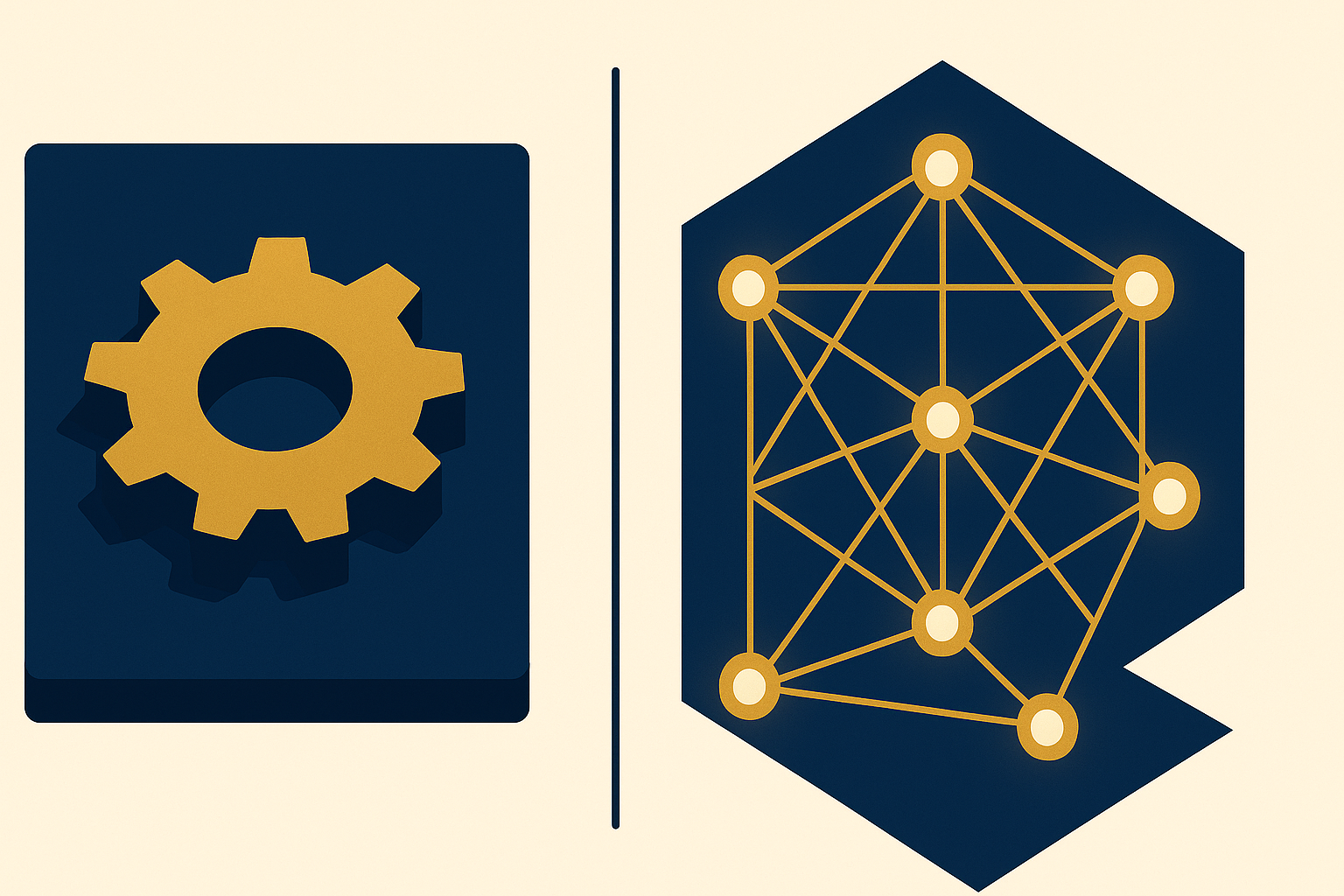
| Structure | Single model + tools | Many agents, orchestrated |
| Fails when | The task is ambiguous | Coordination or guardrails break down |
| Example | Draft this email | Run the whole outbound campaign |
Read the table and one thing stands out: everything that makes agentic AI powerful (autonomy, coordination, adaptation) is also what makes it harder to control.
Which one your business actually needs
Start with the smallest unit that solves a real problem. For most teams, that's a single agent on one repetitive, high-volume task, the kind of work we cover in how agentic AI automates lead qualification. Prove it works on live data. Then widen.
You graduate to agentic orchestration when several agents need to share context and hand off to each other: research feeding outreach, outreach feeding your CRM, the CRM triggering follow-up. At that point the orchestration layer earns its keep. Before that, it's overhead.
Don't buy the manager before you've hired the first worker. Most automation wins come from one well-scoped agent, not a fleet.
The hype is real, and so is the failure rate
Demand is enormous. Gartner expects 40% of enterprise applications to include task-specific AI agents by the end of 2026, up from under 5% in 2025.
The caution sits right next to it. Gartner also predicts more than 40% of agentic AI projects will be cancelled by the end of 2027, citing runaway cost, thin business value, and weak risk controls. Adoption and production are also miles apart. Many enterprises say they've adopted agents, but far fewer run them live.
None of that is a reason to wait. It's a reason to keep the first project small and measurable, and to let one agent that works earn the next one.
Getting it right without overbuilding
The distinction matters because it decides your first move. Need one job done well? Build an agent. Need a goal owned end to end? Design an agentic system, but only once the individual jobs already work.
If you're weighing which to build for your own operation, tell us the task that's eating your team's hours and we'll tell you honestly whether it needs an agent or a system. You can also see the automation work we do across research, outreach, and reporting.
Agent or agentic, the rule is the same: start small, prove it, then scale what earns it.
Frequently asked questions
An AI agent performs one well-defined task when called. Agentic AI is the wider system that sets goals, plans multi-step work, and coordinates several agents, tools, and data sources to reach an outcome on its own.
Partly. Multiple agents are the building blocks, but agentic AI adds the orchestration layer (goal-setting, planning, memory, and coordination) that turns a set of task-doers into a system that pursues an objective.
Most businesses start with a single AI agent on one painful task, prove the value, then move toward agentic orchestration once several agents need to share context and hand off work.
They can be, but Gartner expects over 40% of agentic AI projects to be cancelled by end of 2027 over cost and unclear value. The teams that win scope tightly and start small rather than automating everything at once.
Ready to automate the work?
Media Targeters builds custom agentic AI systems that run your operations while you focus on growth.
Book a discovery callRelated Articles
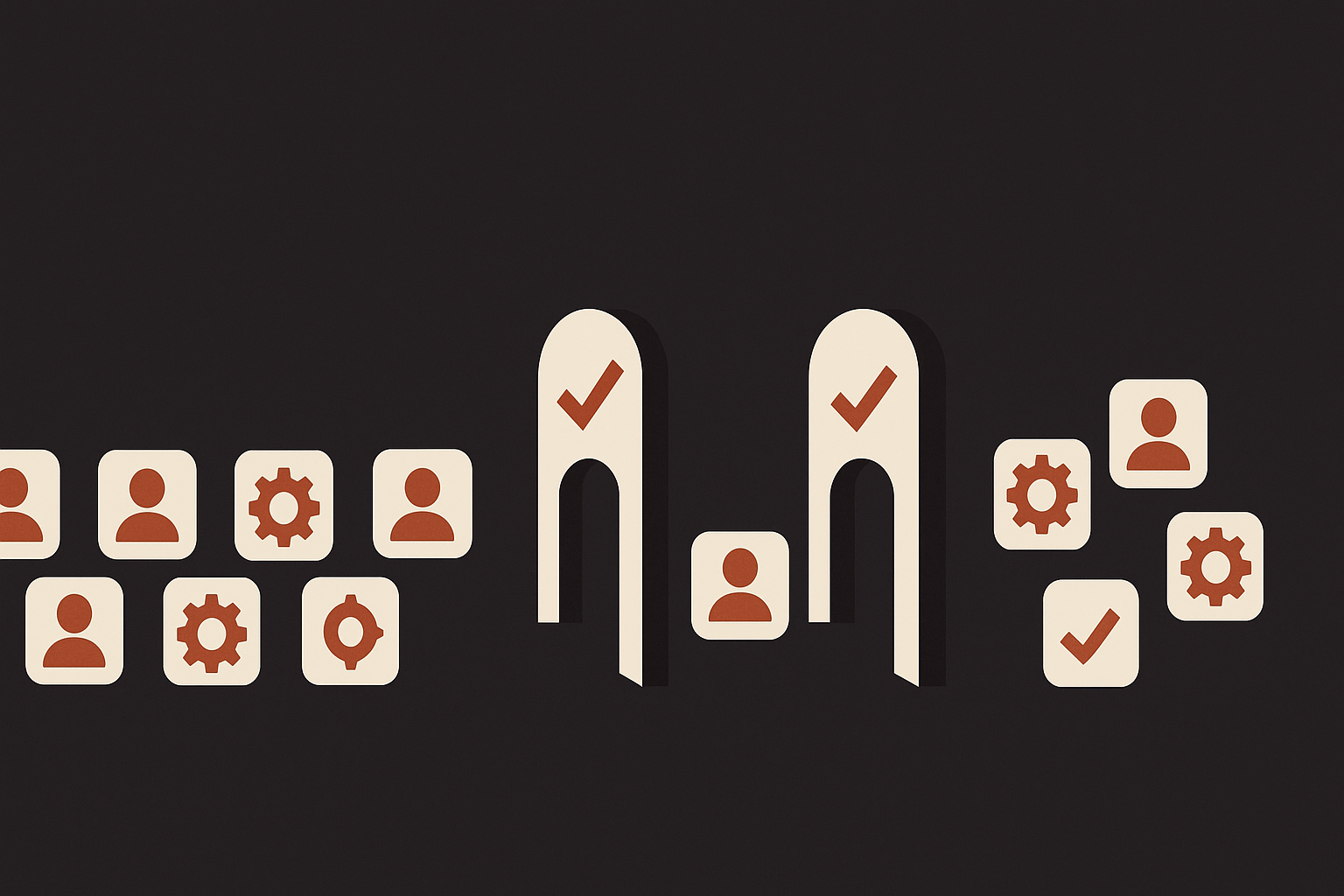
Why Agentic AI Projects Fail (5 Questions First)
Gartner expects over 40% of agentic AI projects canceled by 2027: not weak models, weak governance. Five questions predict which ones survive.
AI-Native SaaS Architecture: The 2026 Blueprint
The monolith is out. AI-native SaaS architecture in 2026 runs on real-time data, reliable backend AI, and MCP: the protocol that carries apps into ChatGPT.
How Agentic AI Automates Lead Qualification
See how agentic AI automates lead qualification end to end (scoring, enrichment, and instant follow-up) and the metrics that prove it pays off.

Morocco Real Estate 2026: Boom, Crash, or Neither?
Is Morocco's real estate market booming or crashing in 2026? Bank Al-Maghrib data shows a 40% Q1 transaction drop, but the yearly picture is milder.